
For people told it's back surgery or nothing
$49 Spinal Decompression Voucher
Texas Spine Clinic · San Antonio
DRX9000 Decompression Consultation
No referral needed · Same-day appointments available
Where Should We Send Your Voucher?
By providing us with your information you are consenting to the collection and use of your information and consent given for receiving SMS messages upon submission in accordance with our Terms of Service and Privacy Policy.
Your spine
Pick the one that fits best. We’ll explain what’s usually behind it, and your answer helps us prepare for your exam.
Pills calm the inflammation — for a while. Adjustments move the joints — for a while. An epidural quiets the nerve — for a while.
Each one touches a single tissue, and none of them touches the disc. The pressure that caused the problem is still there.
That's why everything worked “for a while,” and nothing held.
A surgeon has recommended an operation — or told you you're not bad enough yet — and you want to try this first. That's who this is for.
Nothing about this closes a door. Whatever options you have today — an injection, a surgical consult, another opinion — you'll still have every one of them when you're done here.
A fused segment doesn't come back, and scar tissue doesn't unform. Trying the reversible thing first isn't a compromise. It's the order that makes sense.
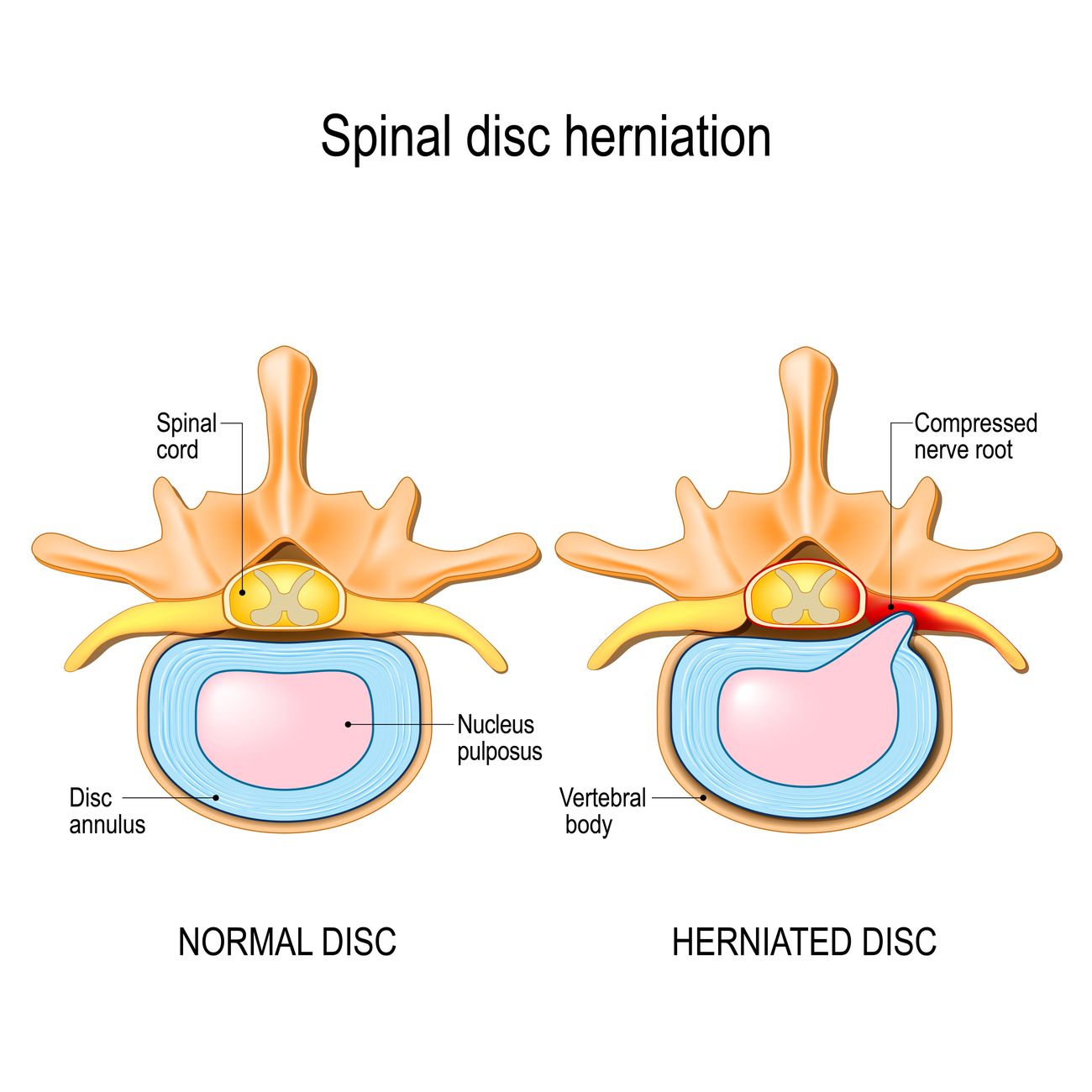
Your disc is your shock absorber, about 90% fluid. Overload it and two different things can go wrong — one sudden, one slow.
Inside the disc, gentle unloading creates a negative pressure — a vacuum effect — that draws fluid, oxygen and nutrients back toward the disc's center. A herniation can begin to retract, pulling back off the nerve.
We read your actual imaging before anyone talks about treatment.
When a disc bulges it can press straight onto a nerve root. That's the electric pain down your leg, the burning, the tingling, the numb toes.
Sciatica that traces to a disc pressing on a nerve is one of the clearest reasons to have this conversation.
Go to an emergency room today, not to an appointment, if you have new loss of bladder or bowel control, rapidly worsening weakness, or numbness in the groin, the inner thighs, or the area you sit on.
The DRX9000 applies a precise, computer-controlled pulling force to your lower back or neck — customised to your body, your diagnosis and the exact spinal level that's injured.
Treating your neck instead? The cervical setup is different — same principle, different harness.
If decompression isn't right for you, we'll tell you at the consultation and point you toward the right next step — even when it isn't us.
No referral needed. Same-day appointments available.
The DRX9000 is an FDA-cleared, computer-controlled spinal decompression system. It gently unloads the four tissues that keep your spine in pain — the discs, the joints, the nerves and the muscles — at the same time. No surgery. No injections. No medication to live on. Nothing cut, nothing fused, nothing implanted, no downtime — you drive yourself home and go back to work.
It probably didn't start with anything dramatic. You bent over to pick something up. You stood up out of the car. You put on your shoes. And your back went out — like a switch flipped.
Since then you've done what everyone does. The ibuprofen. The sheet of exercises from physical therapy. Maybe adjustments that felt great for two days, then wore off. Maybe an injection that bought you three good weeks — and a second one that barely worked at all.
And now you're here, probably late at night, reading about spinal decompression with two browser tabs open: one full of success stories, and one full of doubts.
This page is written for exactly that moment. We'll show you how it works, who it's for, who it's not for, what it costs, and how to tell a real decompression program from a sales operation.
The mechanism
It applies a precise, computer-controlled, rhythmic pulling force to your lower back or neck — customised to your body, your diagnosis and the exact spinal level that's injured. You lie on the table, fitted in a harness, for about 25 to 30 minutes. Most patients find it comfortable. Many doze off.
Inside the disc, that gentle unloading creates a negative pressure — a vacuum effect — that draws fluid, oxygen and nutrients back toward the disc's center. The disc begins to rehydrate. A herniation can begin to retract, pulling back off the nerve. At the same time the facet joints regain motion, the guarding muscles finally relax, and the nerve gets the space it needs to calm down.
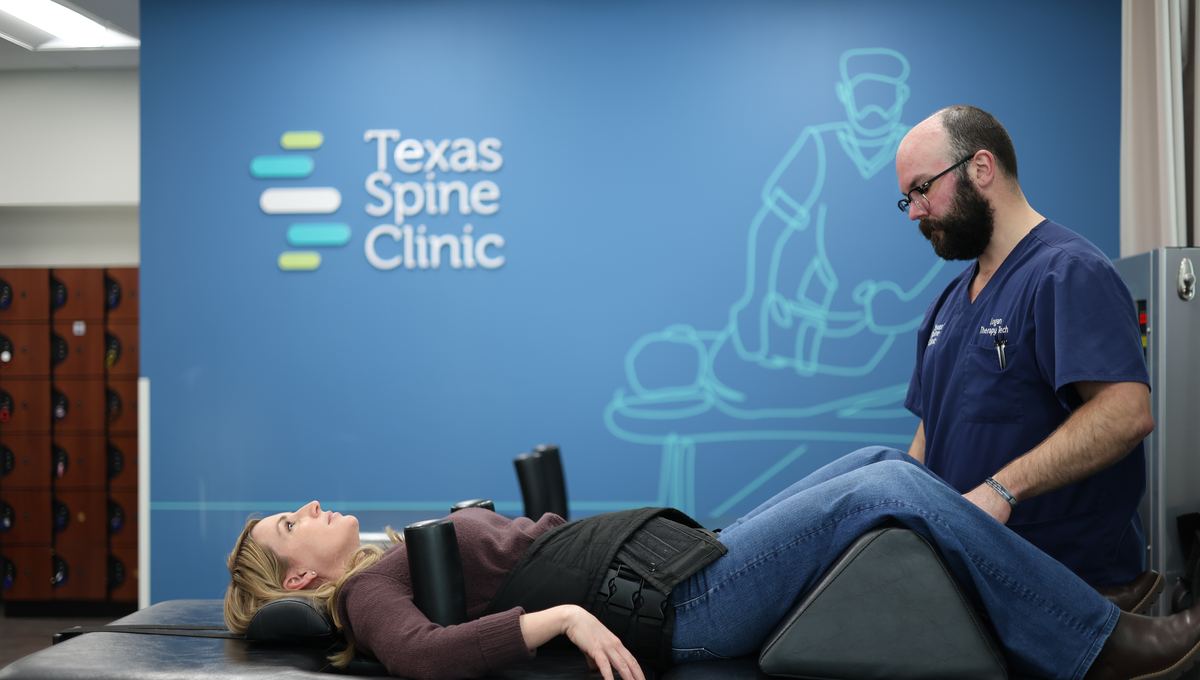 Watch · lumbar demo
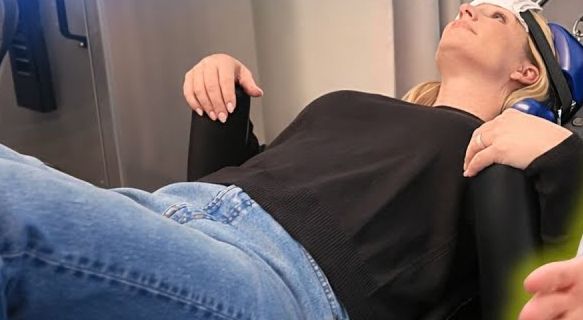 Watch · cervical demo
And nothing about this closes a door. Whatever options you have today — an injection, a surgical consult, another opinion — you'll still have every one of them when you're done here. That isn't true in the other direction: a fused segment doesn't come back, and scar tissue doesn't unform. Trying the reversible thing first isn't a compromise. It's the order that makes sense.
Your exam and your first treatment, for $49.
Where this gets personal
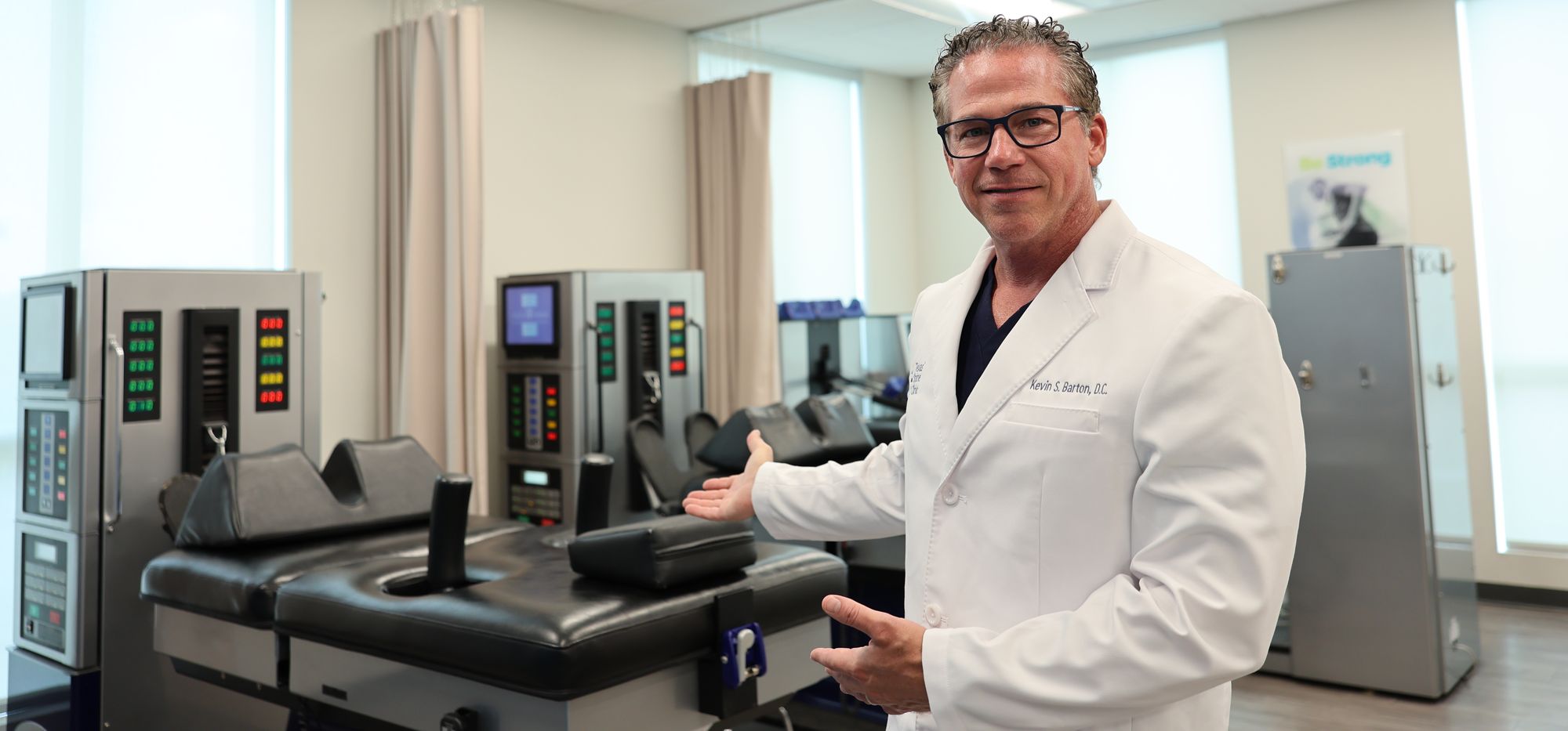
Dr. Barton has practiced for 23 years and has overseen more than 2,000 decompression patients across the 21 years he's used this machine. Then his own back gave him one of the worst herniated discs he had ever seen in practice.
His words: "My own MRI was humbling." He treated it the same way he treats yours — on the DRX9000 — and documented the whole thing.
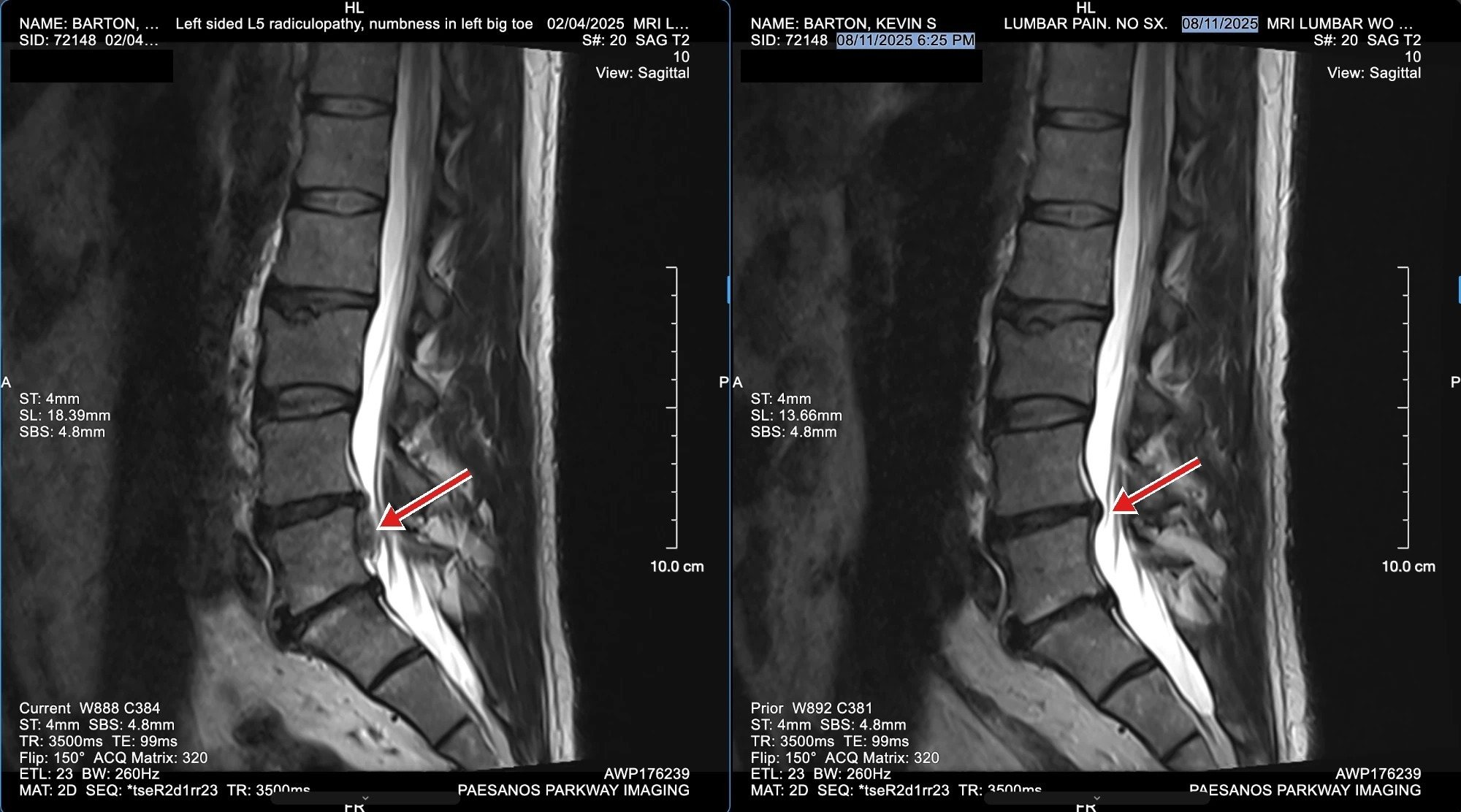
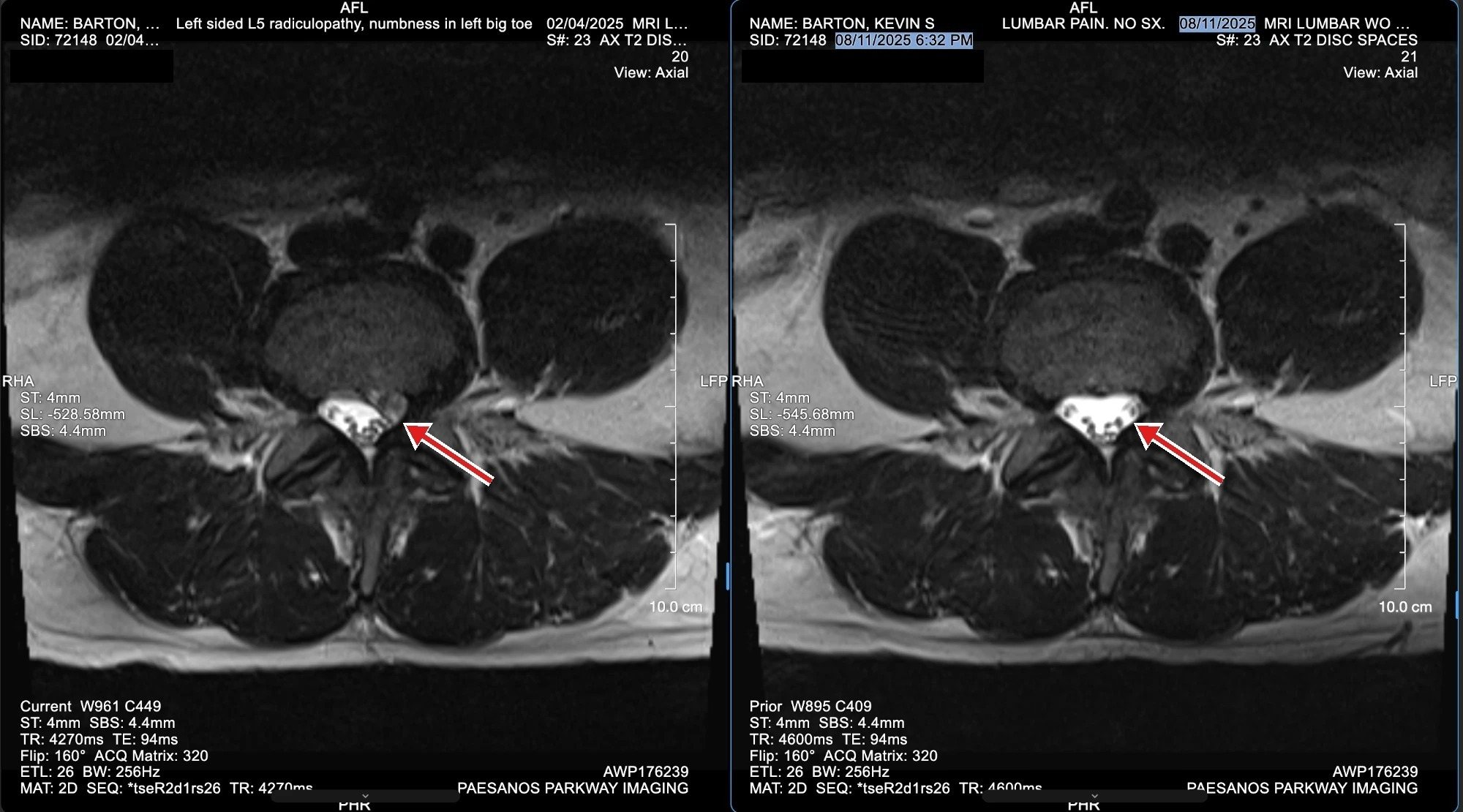
He filmed all of it. The first MRI, the exam, the sessions, the week the foot drop got worse before it got better, and the follow-up imaging at the end. Nine episodes, nothing edited out.
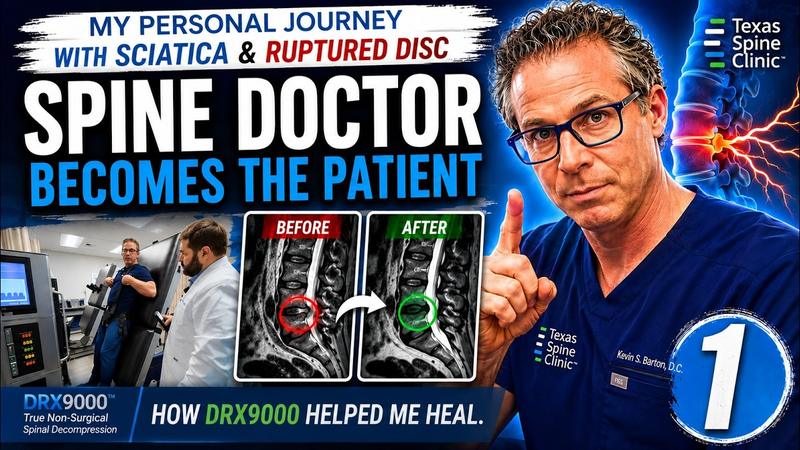
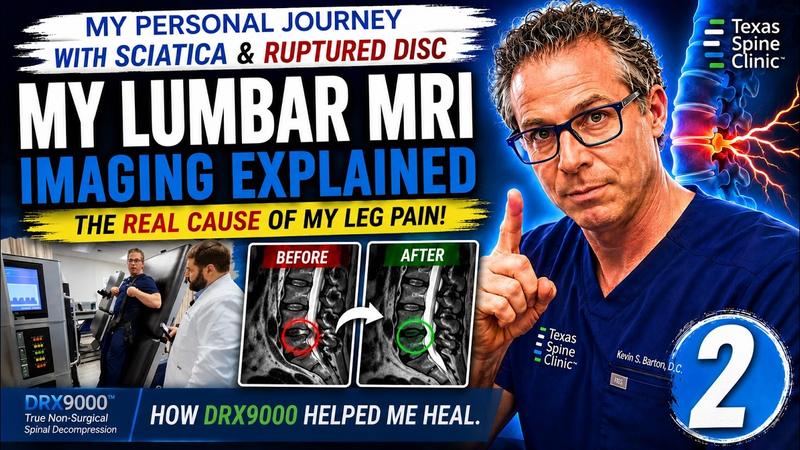
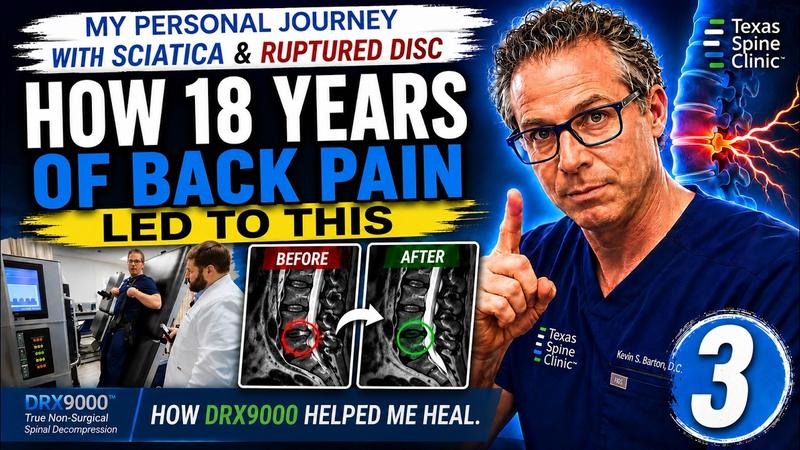

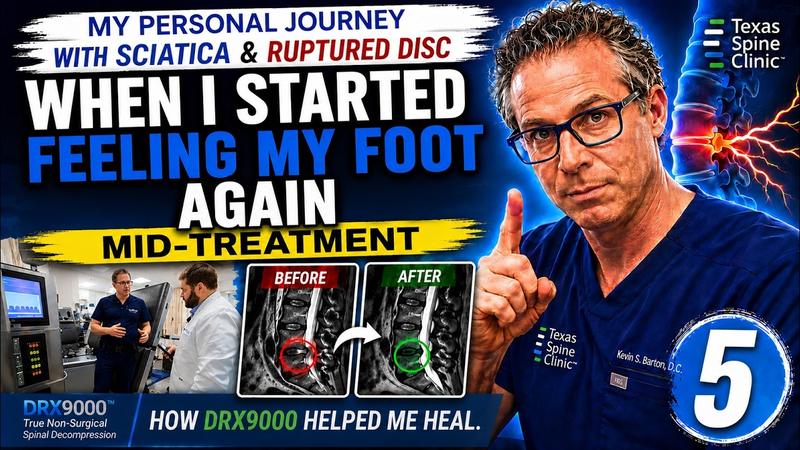
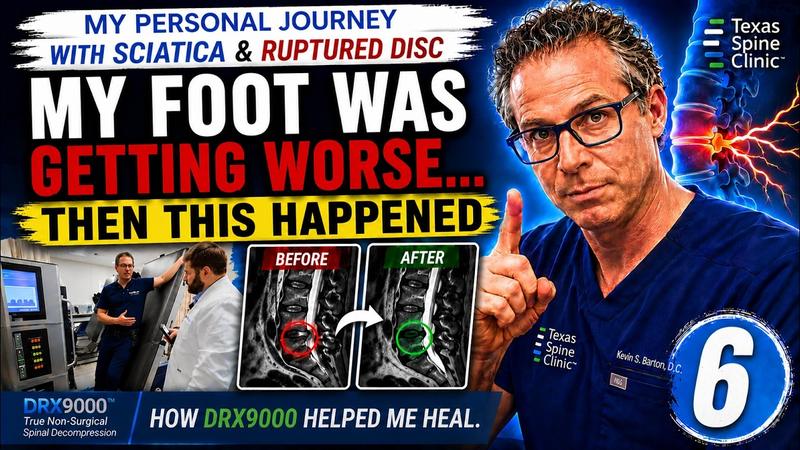
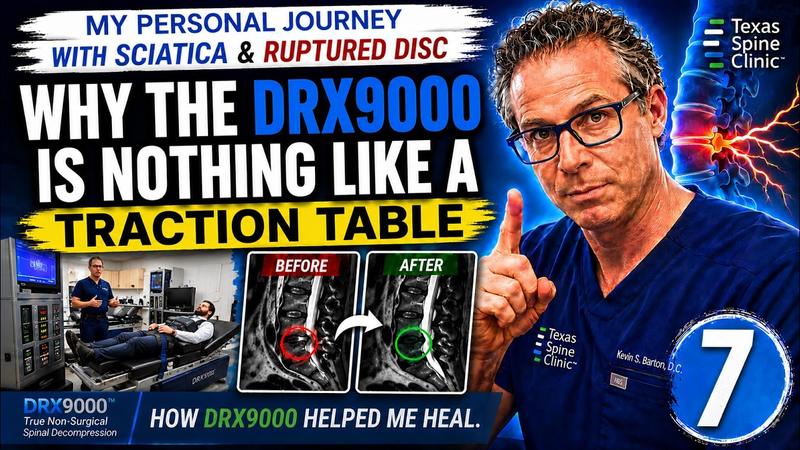
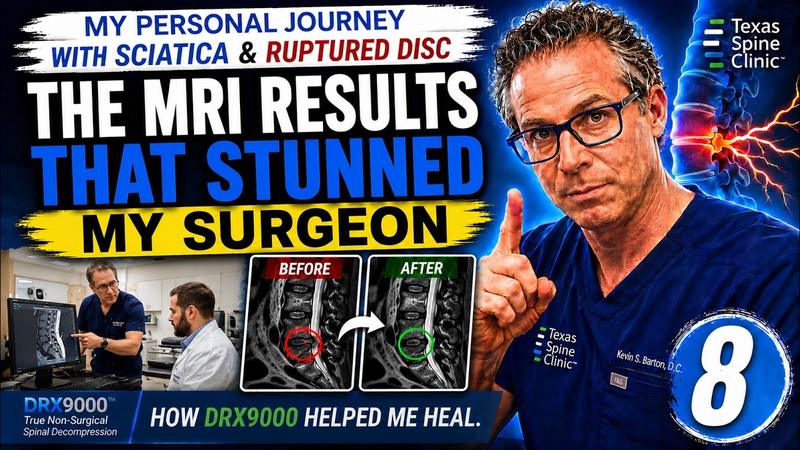
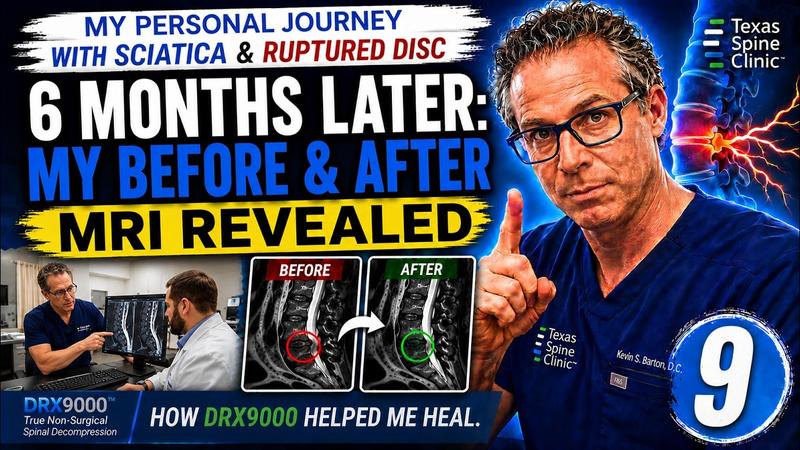
We'll never tell you this machine is magic. We'll show you what it did for the doctor who owns it, and let you judge.
Your exam and your first treatment, for $49.
Candidacy
If any of those describe you, we'll tell you at the consultation and point you toward the right next step — even when it isn't us. Some of the worst decompression stories online come from clinics that skipped this screen.
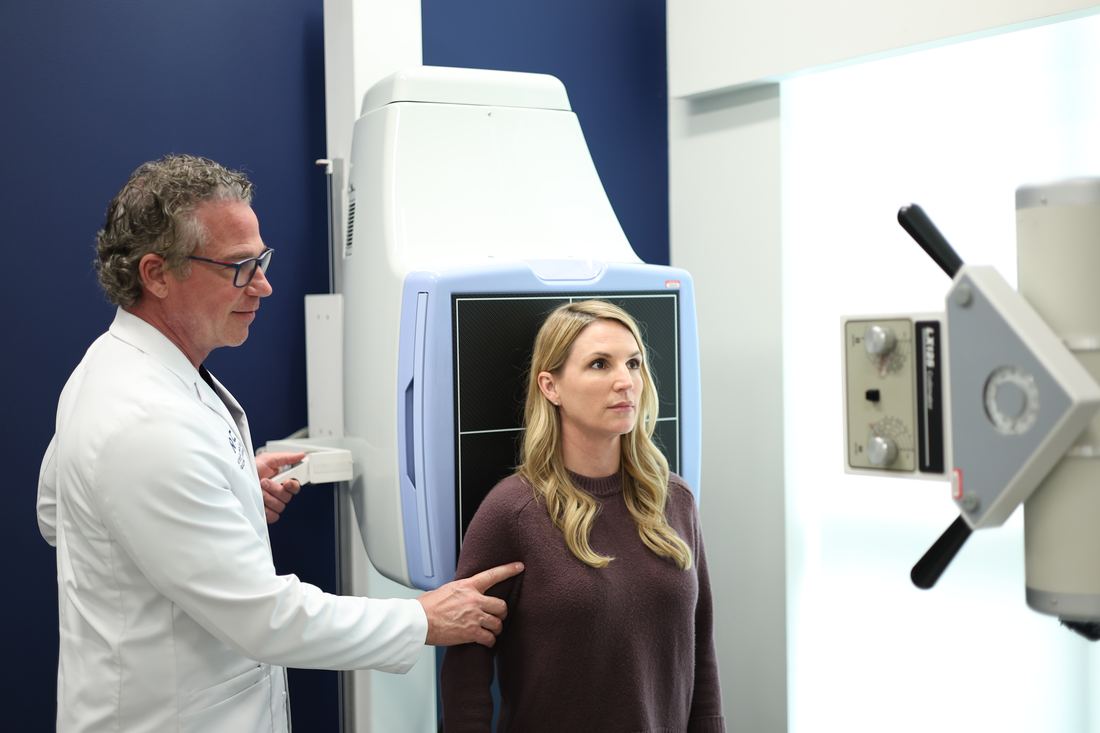
The $49 consultation
Patients








 En español
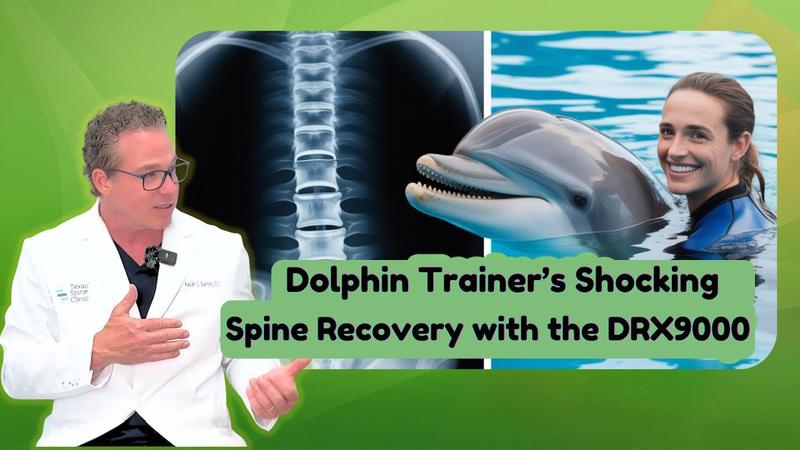
Real patients, telling it in their own words, with their permission. Individual results vary. See every patient story →
“I am so grateful to Dr. Huffman and Texas Spine Clinic for offering Non-Surgical Spinal Decompression treatment. After a few short series of treatments, I always leave pain-free… The team, the physical therapists and Jennifer (the receptionist), are so attentive and caring. Thank you so much!”
“I have been extremely pleased with the care and attention given to my back issues. Dr. Huffman and the therapists not only provide excellent care, but are caring and thoughtful. When I started the program, I was in pain all day and had trouble sleeping at night due to pain. I was using a walker at home and struggled with a cane when I went to the doctor. I was confined at home with pain killers. Now, I don't take pain medication… I have made so much progress, and my activity level has improved greatly.”
Reviews quoted verbatim from our public Google profile.
Your exam and your first treatment, for $49.
Cost & insurance
You'll have your figure in writing at your MRI review — and your care continues that same day.
We examine you, review your imaging with you, verify your benefits at no charge, calculate your insurance credit, and hand you the number — then we keep your care moving, because every day a compressed nerve waits is a day it doesn't heal. Here's how the money actually works.
Not commercial insurance, not Medicare. That isn't our policy — it's how every carrier classifies it.
If you carry a commercial health plan, we can usually generate an insurance credit through it, which we apply against your cost. How big that credit is depends on your specific benefits.
And expect to know exactly what it is, in writing, at your MRI review. Finding out is free — we verify your benefits for you and apply the credit before your number is ever quoted.
This program isn't covered. If you also carry a secondary major health plan, we can usually generate a credit through it. We check that for you up front.
Most patients settle the program at the start and earn a time-of-service discount for doing it. If paying up front isn't realistic, that's not a problem: we work with CareCredit and Affirm, and we have flexible in-office payment plans.
Which raises the obvious question: how would you know if it isn't working?
We make that call around the second week, after eight to ten sessions. That's the point where a spine that's going to respond has usually started to show it. If yours hasn't, we tell you then — not after another month of visits — and you don't pay for the rest.
Be careful with the word "covered." Covered doesn't mean free — a procedure your plan pays for can still run you to your deductible, your coinsurance and your annual limit, and cost you weeks off work besides. The question worth asking about any option is what it actually costs you.
Weigh it against what you're actually deciding between. By the time you add up the surgeon's fee, the facility, the anesthesia, and the weeks away from work, the investment in decompression is often not far from — and frequently less than — the true cost of spine surgery.
Everybody knows somebody whose back surgery didn't go well: the coworker who never went back to work, the uncle who still lives on painkillers. You can have the best surgeon in the world, and back surgery can still bring complications that can never be taken back.
For Dr. Barton, when it was his own ruptured disc on the MRI, the money was never the biggest difference. The reason he didn't have back surgery was the unknown. If an operation doesn't go perfectly, some of what follows can't be given back: scar tissue that forms around the nerve and stays there. The recurrent herniation at the same disc. An outcome so common it has its own diagnosis — failed back surgery syndrome. The next operation the first one sets up, ending at a fusion. And infection — the complication nobody signs up for. Decompression asks you to risk none of those.
How it works: visit one is the exam and your first time on the table — both included in the $49 — then the MRI. Visit two is your MRI review: your findings on screen, your number in writing, and if you're a candidate, your care continues that same day.
Your exam and your first treatment, for $49.
Questions patients actually ask
Straight answer: it varies, and the early sessions can flare before they help. Most responders notice real change mid-program — around weeks three to five — not in the first days. We re-examine on a schedule so you're never guessing whether it's working.
Same family, different animal. Hanging from a bar or an inversion table pulls your whole spine bluntly, and your muscles guard against it — you can't target a level or control the force curve. The DRX9000 measures and adjusts its pull continuously, targets the specific disc level, and works below the threshold that triggers muscle guarding. That control is the point, and it's what home equipment can't do.
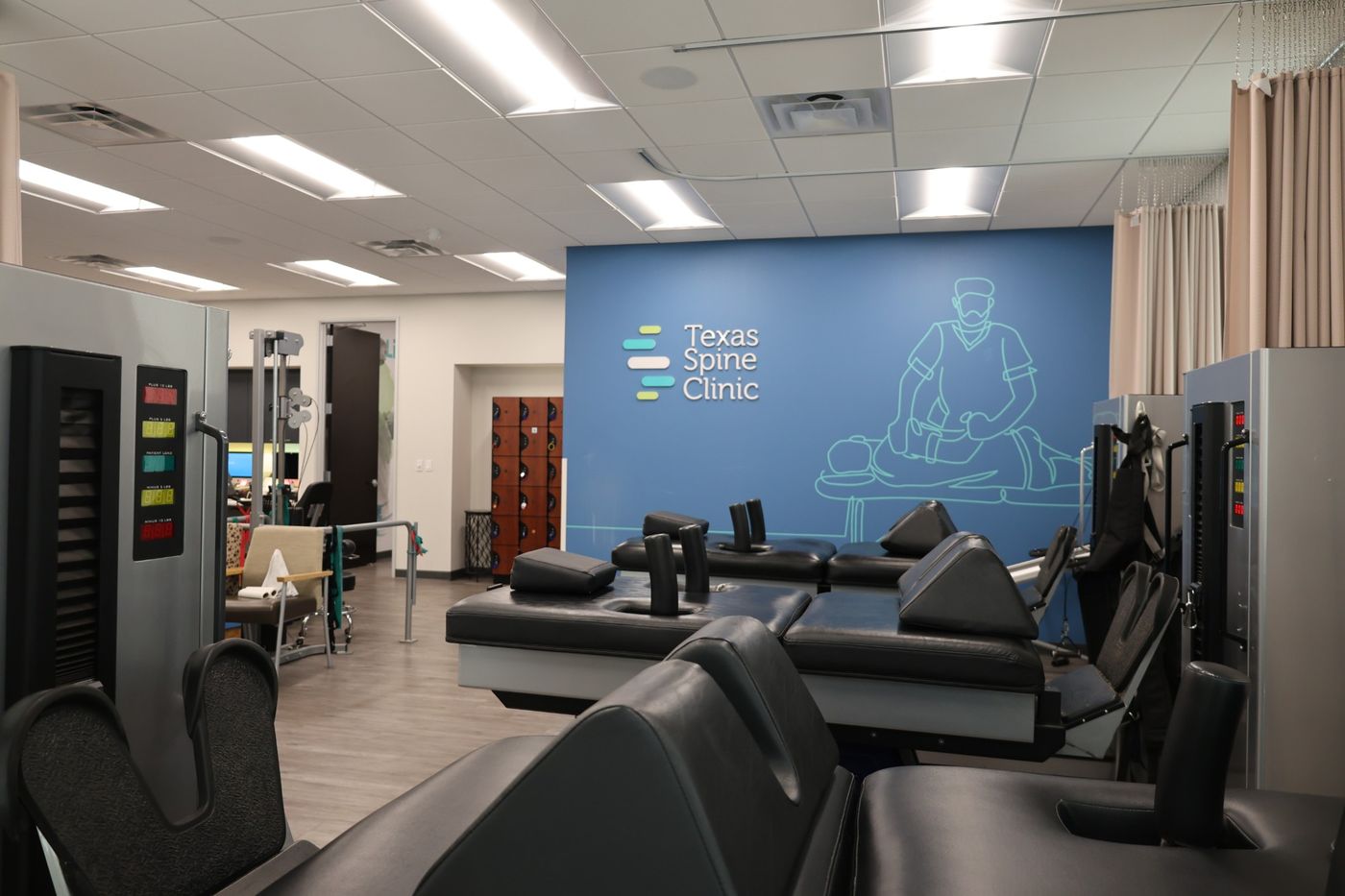
Most patients find sessions comfortable — many fall asleep on the table. Done right, decompression should never feel like an ordeal. Soreness in the early weeks can happen, and we want to hear about it when it does.
Yes. Sessions are about half an hour, there's no downtime, and most patients schedule around work. The bigger commitment is showing up several times a week for the full course — we'll be straight with you about that at the consultation.
Then we say so, out loud, at the checkpoint around your eighth to tenth session — and you don't pay for the part of the program you don't use. Texas law requires that care be prorated, so no clinic in this state can legally sell you an unrefundable block and keep the money if it isn't helping.
From there we help you figure out the next step, whether that's another treatment here or a referral out. No treatment works for everyone, and we'd rather protect your trust than your session count.
A disc that has rehydrated and pulled back off a nerve doesn't re-inflate your pain on a schedule — but your spine is still the one you brought in. That's why the program ends with strengthening rather than just decompression, and why we teach you how to protect the margin you've rebuilt.
What happens next
No referral needed. Same-day appointments available.
Rather book by phone? Call (210) 245-5340.
P.S. You already know what the next year looks like if nothing changes: the same flare-and-fade cycle, a little less golf, a little more caution, planning your day around your back. The four tissues wearing down don't reverse course on their own while the load stays on. One consultation tells you whether taking the load off can change that — and if we don't think it can, we'll tell you that too. That's the whole deal.